








Introduction
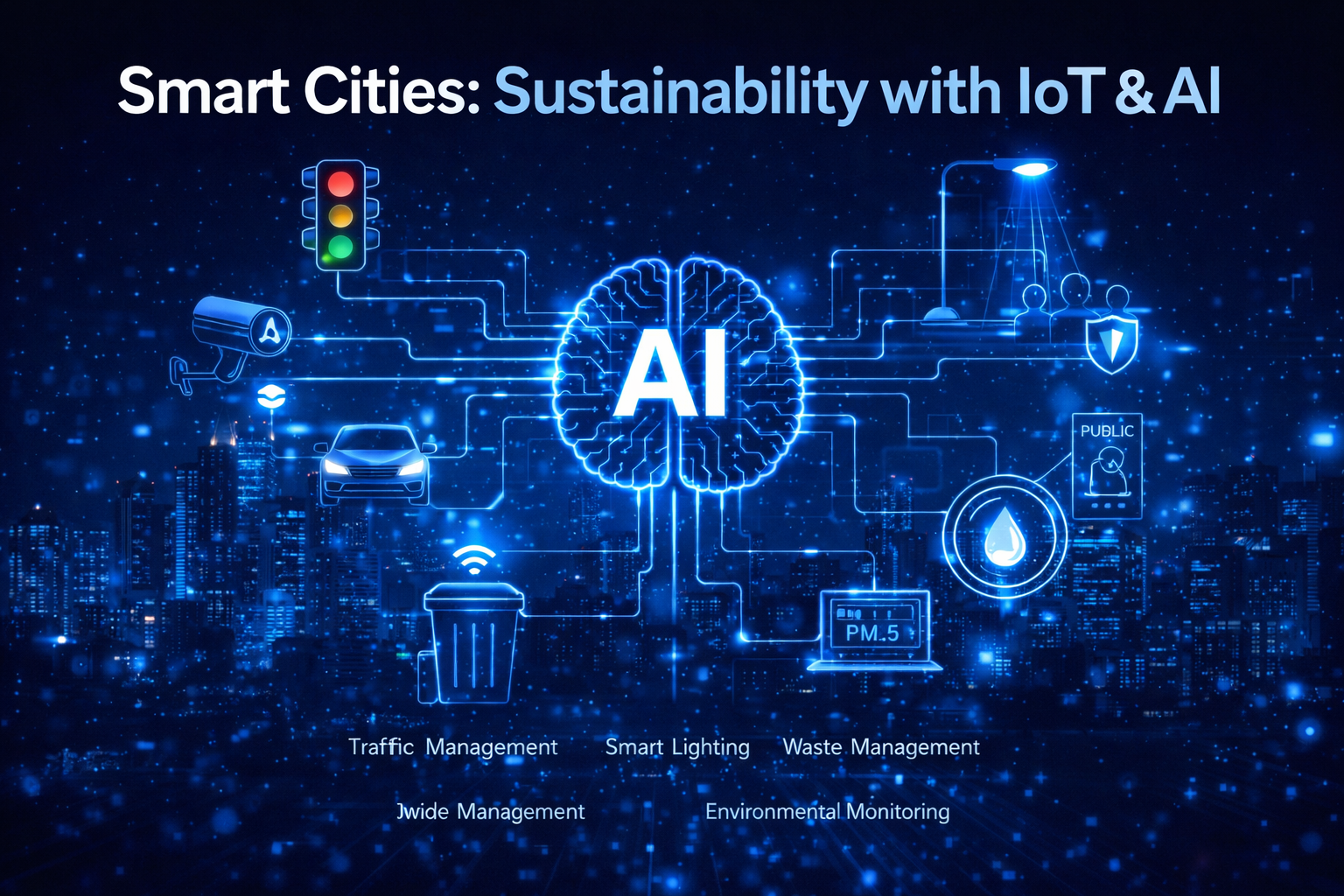
As urban populations grow rapidly, cities face increasing challenges related to traffic congestion, pollution, energy consumption, and public safety. The integration of IoT devices and Artificial Intelligence (AI) is transforming traditional cities into smart cities—making them more efficient, sustainable, and livable.
With over 31 billion connected IoT devices worldwide, smart city solutions powered by AIoT are becoming essential for modern urban development.
What is a Smart City?
A smart city uses IoT, AI, and data analytics to optimize infrastructure, improve public services, and enhance quality of life.
These systems rely on:
- Connected IoT devices
- Real-time data collection
- Intelligent decision-making
How IoT & AI Enable Smart Cities
1. Intelligent Traffic Management
Traffic congestion is one of the biggest urban challenges.
AIoT systems:
- Analyze real-time traffic data
- Adjust traffic signals dynamically
- Reduce congestion and travel time
According to IoT For All, AI-powered systems can automatically optimize traffic flow using real-time insights.
2. Smart Street Lighting
IoT-enabled lighting systems:
- Adjust brightness based on activity
- Reduce energy consumption
- Lower operational costs
3. Smart Waste Management
IoT sensors monitor waste bins in real time.
🔹 Benefits:
- Optimized collection routes
- Reduced fuel consumption
- Cleaner urban environments
4. Public Safety with AI
AI-powered surveillance systems:
- Analyze video feeds in real time
- Detect suspicious activities
- Improve emergency response
Environmental Sustainability with IoT
Air Quality Monitoring
Sensors track pollution levels and provide real-time alerts.
Water Management
IoT systems detect leaks and optimize water usage.
Energy Efficiency
Smart grids balance energy demand and supply efficiently.
These solutions contribute to:
- Lower emissions
- Reduced resource wastage
- Sustainable urban living
Benefits of Smart Cities
🔹 Reduced Operational Costs
Automation minimizes manual processes.
🔹 Improved Efficiency
Real-time data enables faster decision-making.
🔹 Enhanced Public Services
Better transportation, safety, and utilities.
🔹 Environmental Sustainability
Optimized resource usage reduces environmental impact.
Role of AIoT in Smart Cities
AIoT (AI + IoT) enables:
- Self-learning systems
- Real-time automation
- Predictive analytics
As highlighted by IoT For All, AIoT empowers devices to make intelligent decisions without human intervention.
Real-World Impact
Smart cities are already implementing:
- Smart traffic lights
- Intelligent waste systems
- Automated public safety monitoring
These innovations lead to:
- Better urban planning
- Safer environments
- Improved citizen experience
Future Trends in Smart Cities
🔹 AI-Driven Urban Planning
Cities will use predictive models for better infrastructure planning.
🔹 Integration with Industry 4.0
Smart cities will connect with smart factories and industrial systems.
🔹 Autonomous Transportation
Self-driving vehicles will reshape urban mobility.
Conclusion
Smart cities powered by IoT and AI are transforming urban living by making cities more efficient, sustainable, and intelligent. From traffic management to environmental monitoring, AIoT is driving the future of connected ecosystems.
For governments and businesses, investing in smart city solutions is key to building sustainable and future-ready urban environments.